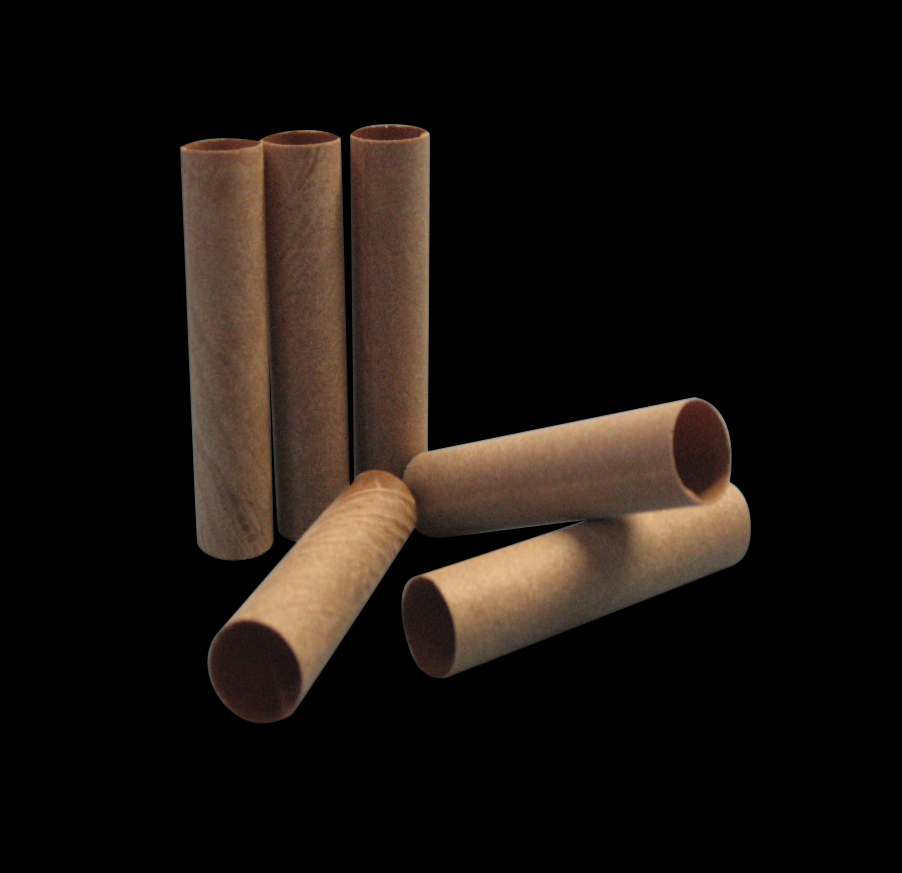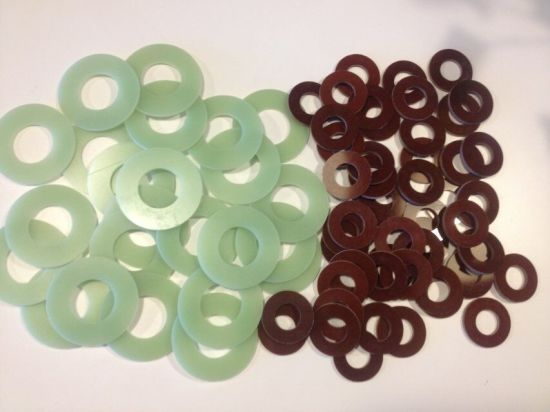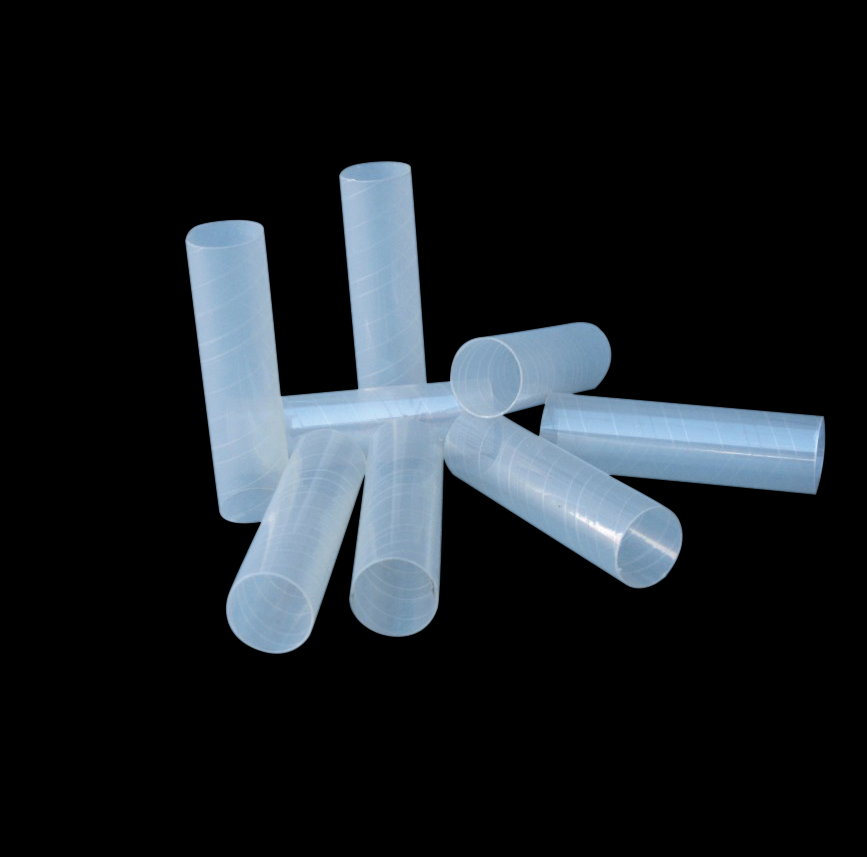

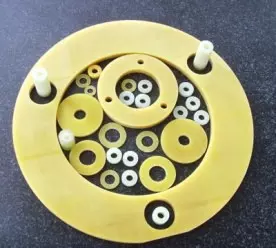
Kaxite G-11 glass epoxy washers are cut from a continuous woven glass fabric laminated with a high-temperature epoxy resin system. Compared with the standard G-10 grade, G-11 uses a higher-performance resin that extends the maximum service temperature — which is why it is specified on flanged joints that run hotter than the standard industrial range. In a fully insulated flange joint the washer is the third dielectric component — gasket at the face, sleeve through the bolt hole, washer under the nut. G-11 offers high mechanical strength in thin sections, low water absorption and low dissipation factor, with stable dielectric performance across wide temperature and humidity ranges. Washers are supplied in standard metric or imperial sizes or cut to your specific ID, OD and thickness. Standard sizes ship in 5–10 days, custom sizes in 10–20 days. OEM / wholesale pricing applies from first order on standard sizes and from 500 pieces per size for custom cut.
G-11 glass epoxy washers are cut from a continuous woven glass fabric laminated with a high-temperature epoxy resin system. Compared with the standard G-10 grade, the G-11 laminate uses a higher-performance resin that extends the maximum service temperature — which is why it is specified on flanged joints that run hotter than the standard industrial range.
The washer is one of the three dielectric components in a fully insulated flange joint — gasket at the face, sleeve through the bolt hole, washer under the nut. Its job is to break the electrical path between the fastener and the flange face so no current can travel between dissimilar metals or leak from a cathodically protected line.
G-11 is a composite laminate made from continuous woven glass fabric impregnated with an epoxy resin system and cured under heat and pressure. It belongs to the same family as G-10, but uses a resin formulation with a higher temperature rating — the key difference that makes G-11 the material of choice when a flanged joint operates above the standard G-10 service window.
Beyond temperature, G-11 retains all the properties that make glass epoxy laminates useful as electrical insulation in bolted joints: high mechanical strength in thin sections, low water absorption, low dissipation factor and stable dielectric performance across wide humidity ranges. That combination is what allows the washer to hold its insulating function under bolt load, temperature cycling and moisture exposure for the life of the pipeline.
The two materials are often specified side by side and share almost all their physical properties. The practical difference comes down to two factors: temperature rating, and price.
G-10 is the standard grade and the more economical choice for the large majority of flange insulation applications — surface and buried joints, water and wastewater mains, above-ground industrial piping where the process temperature stays inside the standard envelope. G-11 costs slightly more, but extends the workable temperature range and is therefore specified on steam service, hot process lines, and any joint where the piping design temperature pushes at or above the G-10 limit.
If you are unsure which grade suits your joint, send the design temperature and the working pressure and we will confirm the correct material.
The design temperature of the flange is above the standard G-10 limit, or the joint operates on steam, hot oil, or high-temperature process service where margin above the standard range is required.
Standard industrial pipeline service, ambient to moderate process temperatures, or where cost efficiency at volume is the deciding factor. See the G-10 glass epoxy washer page.
Insulating a flanged joint requires breaking every current path through the connection. In a fully insulated joint that means three dielectric components working together — and if any one of them is missing, the isolation fails.
At the flange face. Breaks the face-to-face current path. Type D, E or F geometry depending on the flange standard.
Through each bolt hole. Prevents the bolt shank from contacting either flange plate.
Under each nut and typically under each bolt head. Breaks the current path between the fastener and the flange face.
Where the specification calls for them: secondary washers, matching flat washers or extended-length sleeves to suit the flange stack.
| Property | Typical Value | Notes |
|---|---|---|
| Composition | Continuous woven glass fabric + high-temperature epoxy resin | Cured laminate, not moulded |
| Maximum Service Temperature | Higher than G-10 | Key differentiator; confirm exact limit by application |
| Mechanical Strength | Extremely high for a dielectric laminate | Withstands bolt torque without crushing |
| Water Absorption | Low — typically below 0.15% | Stable dielectric performance in wet and humid service |
| Dissipation Factor | Low | Minimises signal loss and heating in the insulator |
| Dielectric Strength | High — consistent across temperature and humidity | Core property for flange isolation |
| Available Sizes | Standard metric and imperial / custom | Also supplied as sleeves and structural parts |
| Formats Supplied | Washers, sleeves, terminal boards, structural components | Machined from G-11 laminate sheet |
Exact values vary with thickness and batch. If your specification sets a fixed limit on temperature, dielectric strength or water absorption, request a batch certificate at the quotation stage.
Washers are supplied as standard metric or imperial sizes, or cut to your specific inside diameter, outside diameter and thickness. Send the following details and Kaxite will return a quotation — typically within one working day for standard sizes.
G-11 is a composite laminate made from continuous woven glass fabric impregnated with a high-temperature epoxy resin system, cured under heat and pressure. It shares the same structural character as G-10, but with a resin formulation that extends the maximum service temperature.
Both are woven glass / epoxy laminates with similar mechanical strength, water absorption and dielectric properties. The practical difference is the maximum service temperature — G-11 uses a higher-temperature resin system and is specified on hot-service flanged joints. See the G-10 glass epoxy washer page for the standard grade.
A fully insulated joint has three dielectric components: the gasket at the flange face, the sleeve through the bolt hole, and the washer under the nut (and typically under the bolt head). The G-11 washer is the third of these — it breaks the current path between the fastener and the flange face. Removing any one of the three components will cause the isolation to fail.
Yes. G-11 washers are supplied in standard metric and imperial stock sizes and cut to your specific inside diameter, outside diameter and thickness. Send the dimensioned drawing or the bolt specification and we will confirm availability and lead time.
Yes. The same G-11 laminate is machined into bolt-hole sleeves, terminal boards and structural insulating components. If your kit needs matched washer and sleeve from the same laminate, tell us at the quotation stage and we will quote them together.
OEM and wholesale pricing applies from the first order for standard metric and imperial sizes, and from 500 pieces per size for custom-cut washers. Send the annual or project quantity and we will quote the volume tier.
Standard sizes ship from stock or on short lead time — typically 5–10 days depending on quantity. Custom-cut sizes are produced to order, generally 10–20 days. Send the specification for a confirmed delivery schedule.
Yes. Washers are supplied as individual components or as part of a complete flange insulation kit with matched sleeves and gaskets. Contact us with the flange standard and size to receive a complete kit quotation.
Send the bolt diameter, washer OD, thickness and quantity — or the flange standard, size and design temperature for a complete kit quotation. Kaxite supplies G-11 washers for OEM flange insulation kits, high-temperature service, and standalone electrical insulation applications.