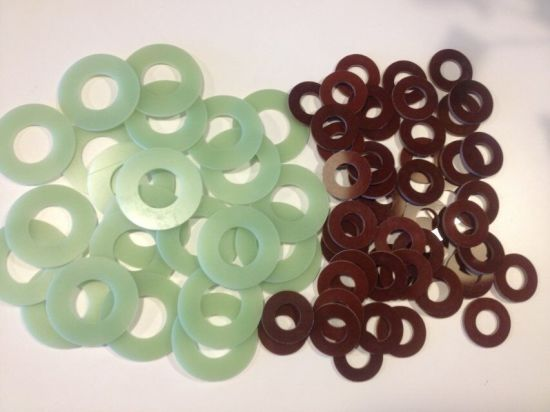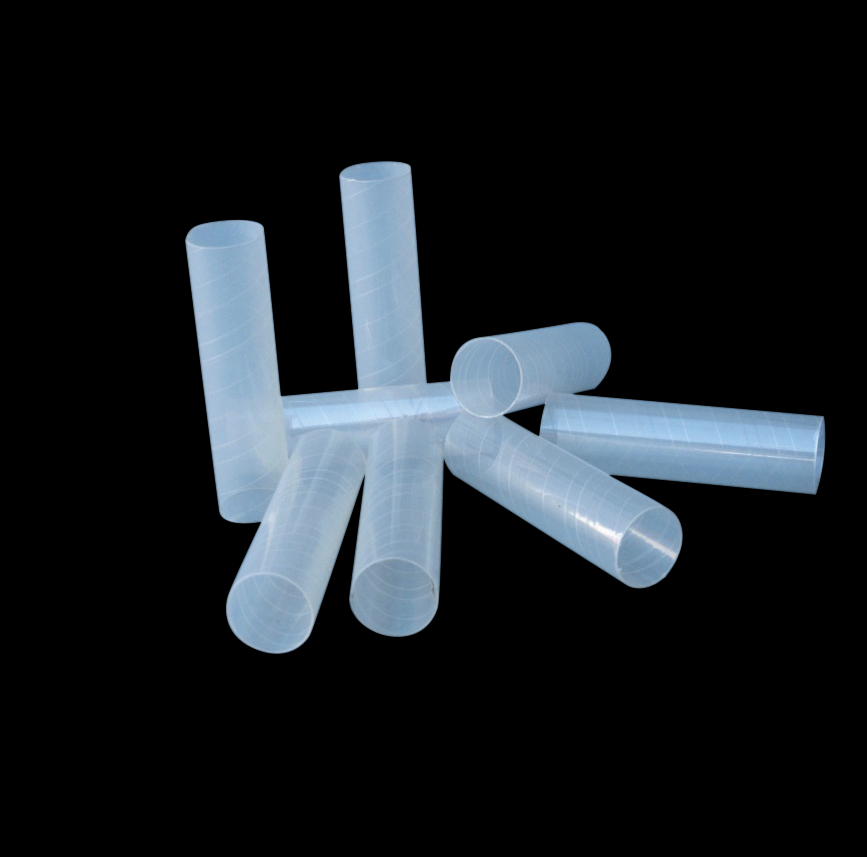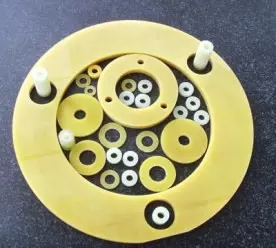

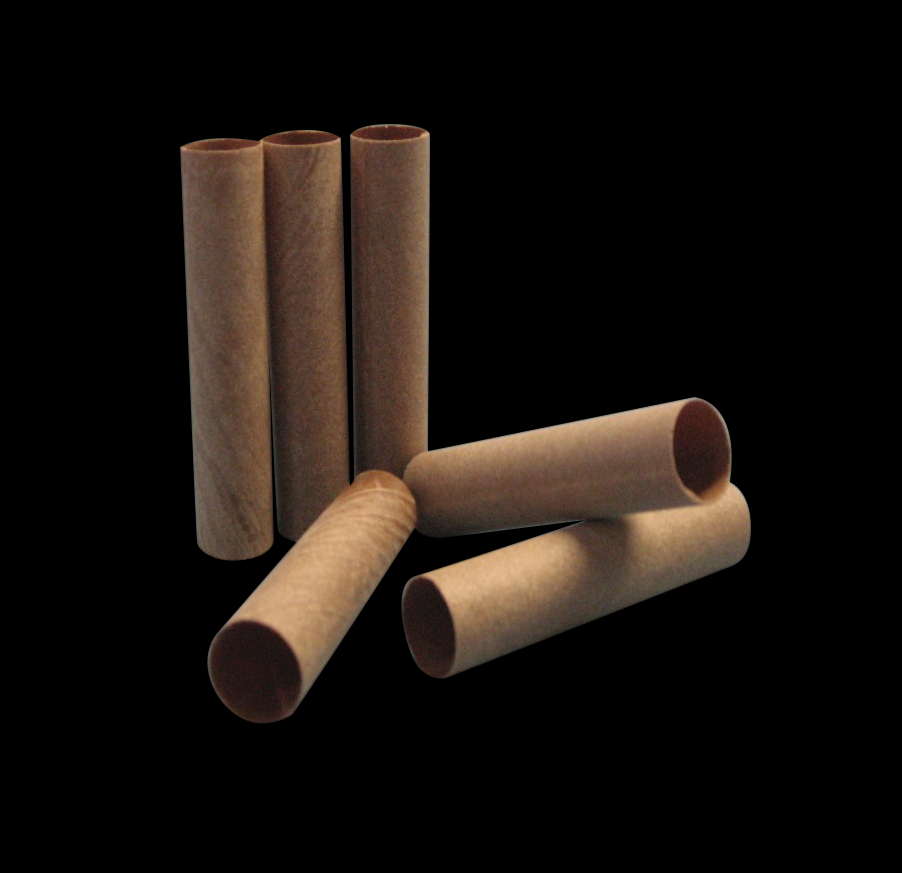
Kaxite phenolic insulating sleeves are the bolt-hole dielectric component for flange insulation kits, manufactured from laminated phenolic and supplied in all standard metric and imperial bolt sizes. They slide over the flange bolt shank to break the electrical path between the bolt and the two flange plates, preventing galvanic corrosion between dissimilar metals and isolating the joint on cathodically protected lines. Phenolic offers low-cost general electrical insulation, is unaffected by most organic solvents, and is well suited to moderate-duty joints in neutral or acidic environments. It is not recommended for alkaline service or heavy bolt torque where cracking risk is high — Mylar sleeve is the recommended alternative in those conditions. Sleeves are supplied in full lengths or cut to customer bolt length, as individual components or as part of a complete flange insulation kit with matched gaskets and washers. Standard sizes ship in 5–10 days, custom sizes in 10–20 days. OEM / wholesale pricing applies from first order for standard sizes and from 500 pieces per size for custom cut.
Phenolic sleeves and tubes slide over the flange bolt shank to break the electrical path between the bolt and the two flange plates. Together with an insulating gasket at the face and insulating washers under the nuts, they complete the three-component isolation system used on every mixed-metal or cathodically protected flanged joint.
Manufactured from laminated phenolic — a composite of woven fabric and phenolic resin — the sleeve offers a low-cost general electrical insulation solution for joints where the operating environment is neutral or acidic and the bolt torque is moderate. For alkaline environments, high-torque joints, or installations where installation damage is a concern, Mylar sleeve is the recommended alternative.
Phenolic sleeve is a low-cost general-purpose bolt-hole dielectric used widely in the pipeline industry for many years. It is not a universal substitute for Mylar, and the correct choice depends on the joint's operating conditions, the torque level, and the installation environment.
Both materials are used for the same role — bolt-hole dielectric in a flange insulation kit. The two are not equivalent in performance, and the industry has shifted toward Mylar as the primary sleeve material in most applications. The matrix below shows where each is the right choice.
| Property | Phenolic Sleeve | Mylar Sleeve | G-10 / G-11 Sleeve |
|---|---|---|---|
| Material | Laminated phenolic / non-asbestos | Polyester (PET) film | Woven glass fabric + epoxy |
| Cost | Lowest | Low-moderate | Highest |
| Installation durability | Brittle — can crack under torque | Flexes — survives bending and misalignment | High mechanical strength |
| Alkaline environments | Not recommended | Suitable | Suitable |
| Dielectric strength | Good | Excellent | Good |
| Water absorption | Low | Very low | Very low |
| Best used for | Cost-sensitive, moderate-duty, dry joints | Standard pipeline joints — industry default | Higher temperature, structural demands |
A fully insulated flanged joint requires three dielectric components working together. Removing any one of the three causes the isolation to fail.
Sleeves are supplied in full lengths or cut to your specified bolt length. Send the following five details and Kaxite will return a quotation — typically within one working day for standard sizes.
It is manufactured from laminated phenolic — a composite of woven fabric and phenolic resin, cured into a rigid tube and machined to the required ID, OD and length. A non-asbestos laminate variant is also available on request.
Phenolic is effective but brittle — it can crack or break under heavy bolt torque or if it is not handled carefully during installation. Mylar (polyester film) flexes rather than cracks, which makes it the more robust sleeve material for pipeline joints. The industry has largely shifted to Mylar as the standard sleeve for this reason. See the Mylar insulating sleeve page for the recommended alternative.
No. Phenolic sleeve is not recommended for use in alkaline environments. If the joint will be exposed to alkaline media, specify a Mylar or glass epoxy sleeve instead.
A fully insulated joint has three dielectric components: the gasket at the flange face, the sleeve through the bolt hole, and the washer under the nut (and typically under the bolt head). The phenolic sleeve is the second of these — it slides over the bolt shank so the shank cannot contact either flange plate. Removing any one of the three components will cause the isolation to fail.
No. Phenolic laminate is unaffected by most organic solvents, which is one of its advantages in chemical service. The main limitation is alkaline environments, which are not compatible with phenolic.
Yes. Sleeves are supplied in all standard metric and imperial bolt sizes. Custom non-standard inside and outside diameters are produced to order — send the dimensioned drawing and we will confirm feasibility and lead time.
Yes. Sleeves are supplied as individual components or as part of a complete flange insulation kit with matched gaskets and washers. See the phenolic insulating washers page for matching washers, or contact us with the flange standard and size for a complete kit quotation.
OEM and wholesale pricing applies from the first order for standard metric and imperial sizes, and from 500 pieces per size for custom-cut sleeves. Send the annual or project quantity and we will quote the volume tier.
Send the bolt diameter, sleeve outside diameter, length and quantity — or the flange standard and size for a complete kit quotation. Kaxite supplies phenolic sleeves for cost-sensitive general pipeline applications, maintenance replacement, and standalone bolt-hole isolation. For high-torque or alkaline service we will recommend the Mylar sleeve instead.